

For years, seed phrases have been considered the backbone of crypto wallet security. Users were told to write down 12 or 24 random words, store them safely, and never lose them. While this system brought decentralization and ownership to the crypto world, it also introduced one major problem: human error.
Millions of dollars in digital assets have been permanently lost because users forgot, misplaced, or exposed their seed phrases. As Web3 adoption grows, the industry is now moving toward a more secure and user-friendly alternative — next-generation wallet security.
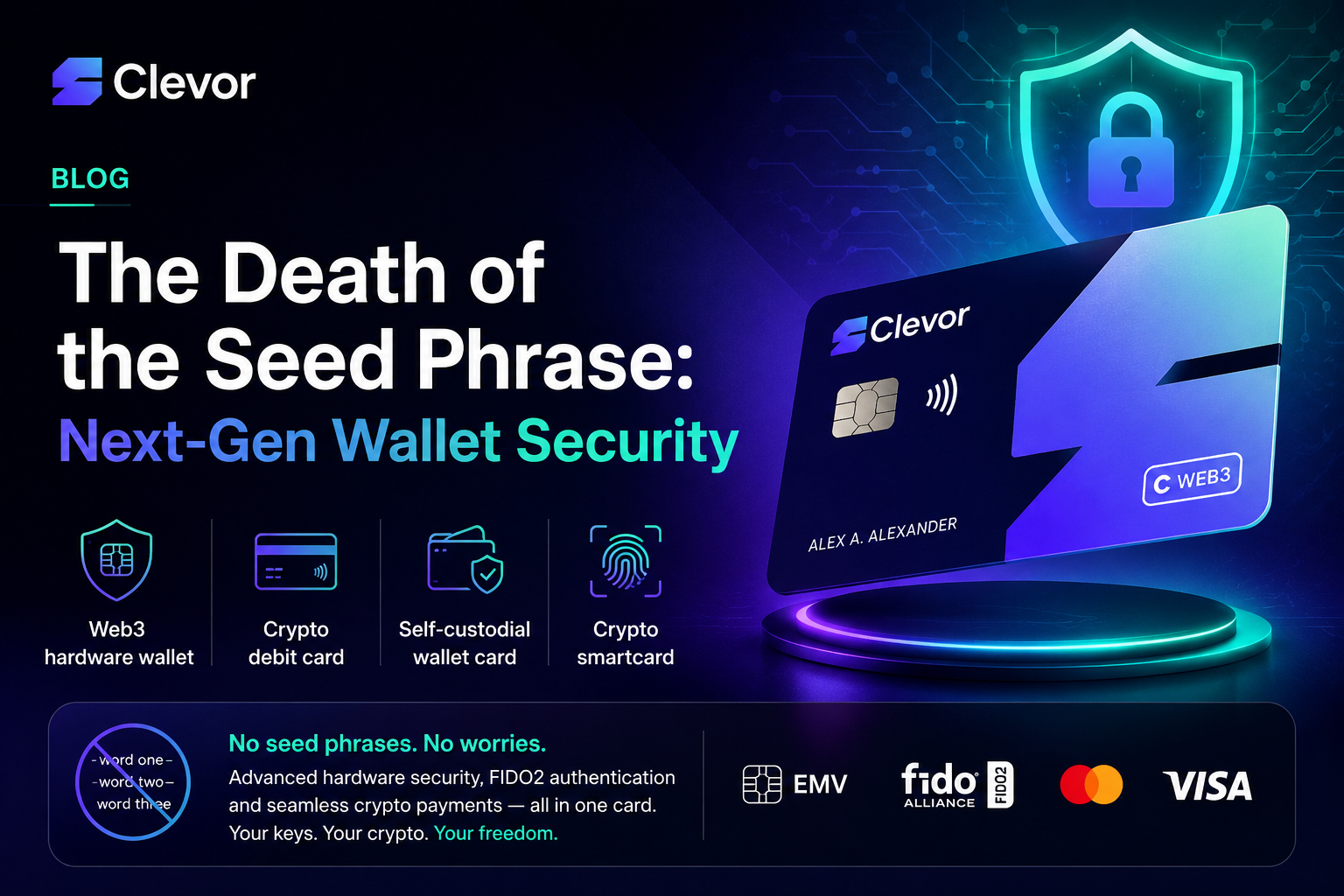
Modern solutions like Clevor Cards are redefining how users interact with crypto by removing the dependency on vulnerable seed phrases and replacing them with advanced hardware-based protection.
A new generation of security is emerging, powered by the Web3 hardware wallet ecosystem, intelligent authentication systems, and seamless crypto payment integration.
Why Seed Phrases Are Becoming Obsolete
Traditional seed phrases were designed during the early stages of blockchain technology. At the time, they provided a simple recovery mechanism for decentralized wallets. However, they come with serious risks:
- Users can lose access permanently if the phrase is forgotten
- Physical backups can be stolen or damaged
- Phishing attacks often target seed phrase theft
- Managing recovery words is difficult for mainstream users
- Poor user experience slows mass adoption
As Web3 enters mainstream finance, users expect security systems that work with the simplicity of modern banking while maintaining decentralized ownership.
This demand is driving innovation toward secure hardware authentication and card-based crypto management.
The Rise of Hardware-Based Wallet Security
The future of crypto security lies in hardware-backed authentication systems where private keys never leave the device.
Solutions like the Self-custodial wallet card model combine the security of cold storage with the convenience of daily payments. Instead of manually storing recovery phrases, users can securely access and manage their assets through encrypted smartcard technology.
This approach dramatically reduces the attack surface associated with traditional wallets.
Unlike browser wallets or mobile apps vulnerable to malware and phishing, hardware-secured systems isolate sensitive cryptographic operations within secure chips.
Introducing the Next Generation of Crypto Smartcards
Modern crypto users want more than just storage — they want usability, speed, and security in a single solution.
The Crypto smartcard concept is transforming how digital assets are managed by integrating:
- Hardware wallet security
- Contactless payment functionality
- Passwordless authentication
- Real-world crypto spending
- Self-custody asset control
According to the uploaded Clevor Card presentation, the platform combines EMV payments, Web3 wallet functionality, and FIDO2 authentication into a single ultra-secure smartcard experience.
The system enables users to conduct on-chain transactions while also making traditional card payments through Mastercard or Visa infrastructure. The presentation describes it as “a Web3 bank in the palm of your hand.”
Security Without Seed Phrases
One of the most innovative developments in next-generation wallet security is cryptographic key replacement technology.
Clevor’s infrastructure introduces a recovery mechanism where replacement cards can retain secure cryptographic identity without requiring users to manually store backup seed phrases. The presentation highlights that this removes the risk of lost keys while preserving security and accessibility.
This evolution solves one of crypto’s biggest onboarding challenges.
Instead of expecting users to behave like cybersecurity experts, the technology creates a secure but familiar banking-style experience.
Web3 Meets Real-World Payments
Crypto adoption cannot scale if users are forced to constantly move funds between wallets, exchanges, and bank accounts.
That is why the combination of a Crypto debit card and hardware wallet technology is becoming increasingly important.
The Clevor ecosystem enables users to top up payment balances directly from their Web3 wallet using secure on-chain authorization. Assets can then be converted for everyday spending without relying on traditional intermediaries.
This creates a seamless bridge between decentralized finance (DeFi) and traditional financial systems (TradFi).
FIDO2 and Passwordless Authentication
Passwords are another weak point in digital security.
Next-generation wallet systems are integrating FIDO2 authentication standards to eliminate password vulnerabilities and reduce phishing attacks.
The uploaded presentation explains that Clevor includes FIDO2 functionality for secure passwordless login across online services.
By combining:
- Hardware authentication
- Biometric support
- Secure cryptographic verification
users gain a significantly stronger security model compared to traditional password-based systems.
The Future of Self-Custody
The crypto industry is moving toward a future where security becomes invisible to the user while remaining extremely robust behind the scenes.
The next phase of Web3 adoption will likely be dominated by:
- Smartcard-based wallets
- Embedded hardware security
- Passwordless authentication
- Real-world crypto spending
- Seedless recovery systems
Platforms like Clevor Cards are helping shape this transition by merging banking-grade infrastructure with decentralized asset ownership.
The result is a more accessible, secure, and scalable Web3 experience for both crypto-native users and mainstream consumers.
As blockchain technology matures, the death of the seed phrase may not just be possible — it may become necessary for the future of secure digital finance.
