

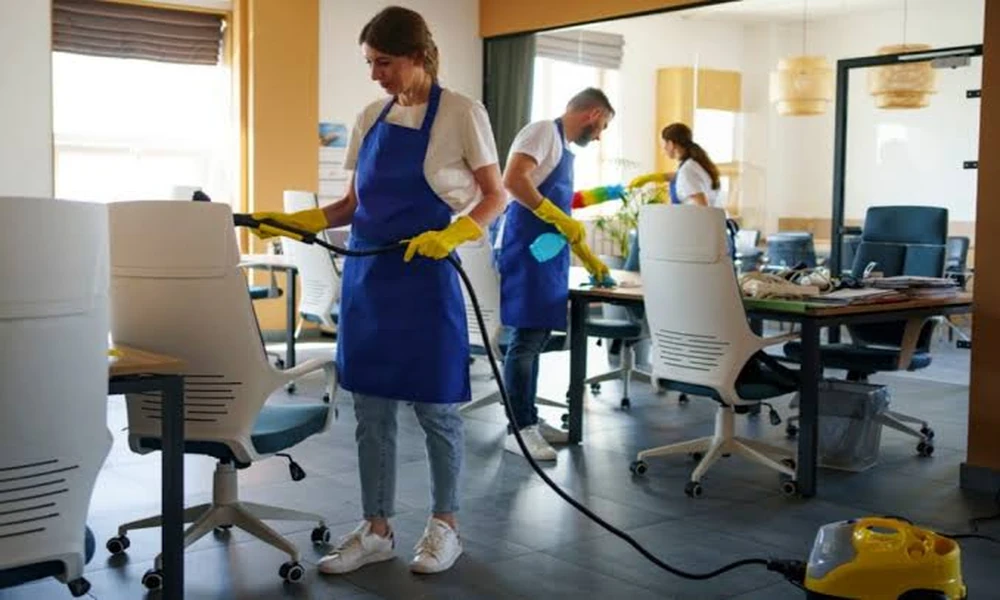
Nobody walks into work in the morning and thinks about how clean the office is. That is exactly the point. A well-maintained workplace registers as the absence of irritation rather than the presence of anything in particular.
The reverse is not subtle at all. A sticky conference table, an overflowing bin beside the copier, or a break room sink still holding yesterday’s mugs gets noticed immediately, and it colors the morning before anyone has opened a laptop.
Walking Into a Space That Feels Cared For
First impressions are not only for visitors. Employees form one every single morning.
Environment works as a cue. A room that has been reset overnight signals order and readiness, and people tend to match the tone of the space they are standing in. A room still holding yesterday’s mess signals the opposite, quietly, before a word is spoken.
There is a practical version of this as well. Visual clutter competes for attention. Fewer things demanding a glance leaves more attention available for the work somebody actually came in to do.
Removing the Friction Nobody Talks About
Small annoyances are cumulative. Taken one at a time they are trivial. Stacked across a week, they wear people down.
An empty paper towel dispenser at the wrong moment, a carpet stain in the lobby right before a client arrives, a kitchen nobody wants to eat in, and a restroom overlooked since morning all cost something in mood and in time.
The worst outcome is when staff quietly start handling it themselves. People hired for skilled work end up wiping counters or hunting for supplies, which is expensive labor spent badly and mildly demoralizing on top of it.
Signaling That People Matter
Here is the part that gets underestimated. Employees read the condition of their workplace as a statement about how much the company values them.
A well-kept office says the organization pays attention to details it does not strictly have to. A neglected one says the opposite, and no amount of internal messaging about culture will outrun what people can see on the walk to their desk.
Vendor choice is where that promise either holds or quietly breaks. Companies such as OneService Commercial Building Service & Security, which serves offices across the New York metropolitan area with nightly janitorial work, day porter coverage during business hours, specialty floor and carpet care, and scheduled quality inspections, build the standard into the arrangement rather than leaving it to chance.
Consistency is what employees actually register. An occasional deep clean is worth far less than a standard that simply never slips.
Breathing Cleaner Air Through the Day
Dust is not only unsightly. It settles on surfaces and into carpet fibers, gathers around vents, and circulates again every time the system runs.
Regular vacuuming with proper filtration, paired with attention to high-touch surfaces like door handles and shared keyboards, makes a real difference in how a workforce feels through a long season spent indoors. Fewer irritants in the air means fewer headaches and fewer people dragging themselves through the afternoon.
Illness also moves through an office with impressive efficiency. Consistent disinfection of shared surfaces is one of the few interventions an employer controls directly.
Carpets and upholstery hold more of this than most people assume, which is why periodic deep cleaning belongs on the schedule alongside the nightly routine.
Keeping Standards Steady Over Time
Cleaning is easy to do well in the first month of a contract. Holding that line for years is the harder problem, and it is the one worth asking about before signing anything.
A schedule matched to how the space is genuinely used helps, as does having someone accountable for inspecting the work rather than assuming it happened.
Turnover on the cleaning side matters more than most managers expect. A crew that comes back week after week learns the building, notices what changed since the last visit, and stops needing to be told anything.
None of this will ever appear in a productivity report. It shows up instead in the ordinary daily experience of working somewhere that feels looked after, which is where most of the difference actually lives.
