

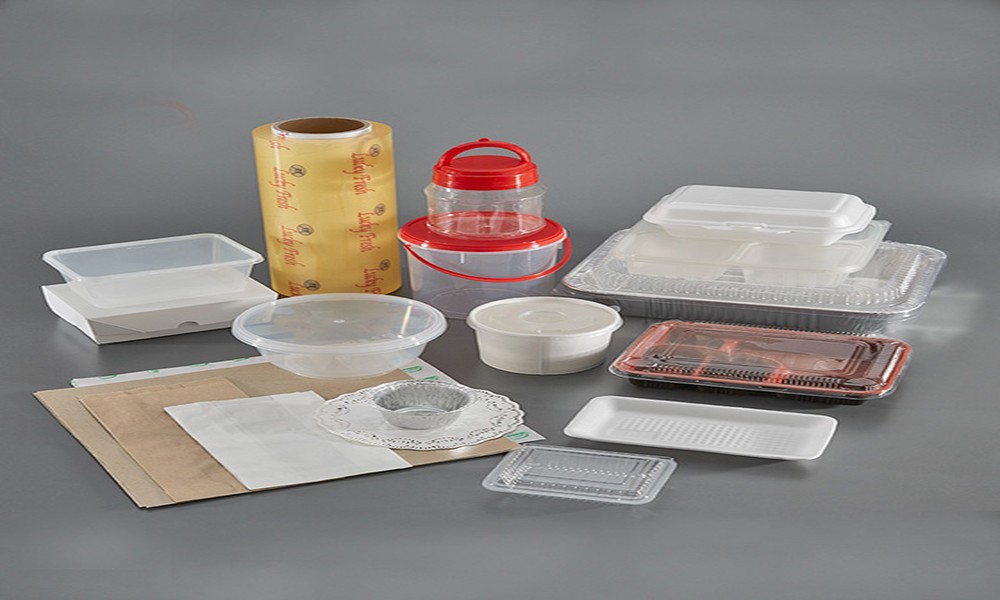
Plastic packaging Singapore businesses rely on must balance three things that rarely align perfectly: cost efficiency, product protection, and the growing pressure to demonstrate environmental responsibility.
The Role Plastic Packaging Plays in Singapore’s Supply Chain
Singapore’s food service, retail, and manufacturing sectors depend on a consistent supply of packaging materials to keep operations running. Without reliable containers, trays, bags, and wrapping solutions, the supply chain between production and consumption breaks down. Fresh food spoils, retail products arrive damaged, and businesses face the kind of operational disruption that directly affects revenue and customer satisfaction.
Plastic remains the dominant packaging material across most of these sectors because it offers properties that alternatives struggle to match at scale: lightweight transport, moisture resistance, formability into complex shapes, and a cost base that allows mass deployment without pricing products out of reach.
Key Formats in Food Packaging
The range of plastic packaging Singapore applications in the food sector includes:
- Ready-to-eat meal trays with sealed or snap-fit lids for catering, delivery, and hawker centre takeaway
- Clear containers for salads, cold desserts, and chilled ready meals that allow visual inspection of the contents
- Sauce cups and condiment containers for portioned servings in food service environments
- Produce baskets and crates for wholesale and retail fresh vegetable display and storage
- Flat-bottom bags and gusseted pouches for dry goods, snacks, and specialty food retail
Each format is engineered around specific requirements: seal integrity, temperature resistance, stackability, and presentation clarity.
Retail Packaging and Consumer Perception
Outside the food sector, plastic packaging in retail serves a different set of priorities. Consumer-facing packaging must communicate product value, protect during transit and shelf display, and provide tamper evidence that reassures buyers about product integrity. In Singapore’s competitive retail environment, where consumers have access to a wide range of locally produced and imported goods, the packaging is often the first point of differentiation that a product can make.
“Packaging is just as important as the product itself in shaping first impressions.” – Lee Kuan Yew.
Well-designed, quality-controlled packaging protects a product’s market position just as effectively as the product’s own formulation.
Industrial and Non-Food Applications
Plastic packaging solutions in Singapore extend well beyond food. Industrial sectors use plastic containers, drums, pails, and protective wrapping for chemicals, lubricants, construction materials, hardware, and consumer goods. Requirements here emphasise chemical compatibility, structural strength for palletised transport, and compliance with any regulations governing the specific substance being packaged.
Contract manufacturers and third-party logistics operators in Singapore’s industrial estate network consume significant volumes of industrial-grade plastic packaging annually. For these buyers, price stability, minimum order flexibility, and supply reliability are the key procurement criteria.
Evaluating Suppliers on More Than Price
Choosing a reliable plastic packaging supplier in Singapore involves looking beyond per-unit cost:
- Material certification: Does the supplier hold food-grade certification for food-contact products?
- Consistency: Are dimensions, tolerances, and material properties consistent across production runs?
- Minimum order quantities: Are MOQs compatible with the buyer’s volume requirements?
- Lead times: how quickly can standard and custom orders be fulfilled?
- Custom printing and branding: Can the supplier accommodate branded or labelled packaging?
- After-sales support: how quickly does the supplier respond to quality issues or delivery discrepancies?
Suppliers who excel across these dimensions earn long-term business relationships. Those who compete on price alone tend to introduce risk into the supply chain in ways that cost more than the savings on the initial order.
The Sustainability Question
Sustainability in plastic packaging is a genuine concern that the industry is actively addressing. Recyclable materials, reduced material weights, post-consumer recycled content, and bio-based alternatives are all expanding in commercial availability. For Singapore businesses operating under corporate sustainability commitments or responding to consumer preference for responsible packaging, working with a supplier who can provide sustainability data for their materials is increasingly a business necessity, not simply a public relations exercise.
Plastic packaging Singapore businesses need today is changing – in material formulation, in design standards, and in the expectations that customers and regulators bring to it. Understanding those changes and sourcing accordingly keeps businesses competitive and compliant through that evolution.
