

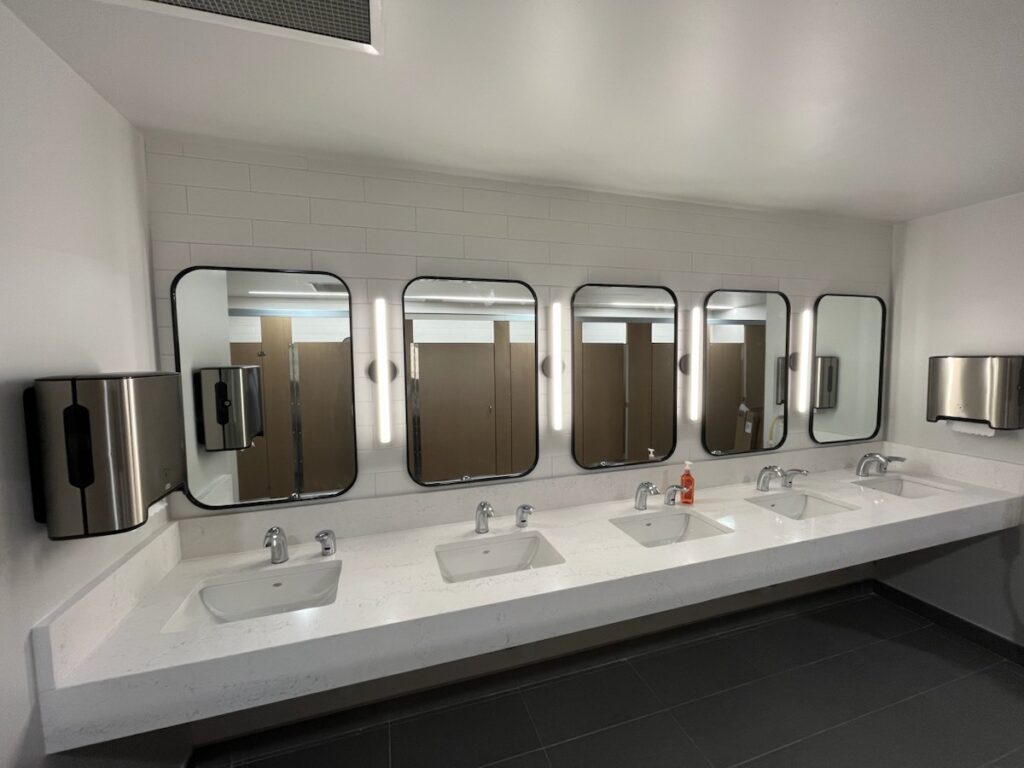
The specification of commercial restroom accessories during facility design has measurable long-term cost implications that are rarely fully accounted for in initial budget comparisons. Fixture durability, replacement part availability, and vandal resistance all affect the total cost of ownership over a facility’s operational life.
Facilities management professionals who have tracked restroom maintenance costs longitudinally find that accessories with lower initial purchase prices frequently generate higher replacement and repair costs within the first 5 years of service, particularly in high-traffic commercial and institutional environments.
How Material Selection Determines Durability in High-Traffic Settings
18-8 stainless steel, the material used in commercial-grade washroom accessories, provides corrosion resistance, structural durability, and cleanability that engineered plastic and chrome-plated zinc alloy alternatives cannot match over extended service periods. In environments with daily cleaning involving hospital-grade disinfectants, material degradation rates diverge significantly within 2 to 3 years of installation.
Gauge thickness in stainless steel accessories affects dent resistance under impact conditions common in high-traffic restrooms. Commercial-grade specifications typically require 18-gauge minimum thickness for accessories subjected to regular physical contact, including paper towel dispensers, soap dispensers, and grab bars.
What Vandal Resistance Features Reduce Replacement Frequency
Vandal-resistant design features including concealed fasteners, anti-theft mechanisms on dispenser components, and reinforced mounting systems reduce the repair and replacement events that constitute the majority of restroom accessory maintenance costs in public-facing facilities. The specifications for commercial-grade commercial washroom accessories from established manufacturers include detailed vandal-resistance ratings and institutional use certifications that procurement teams can use to evaluate total cost of ownership across product alternatives.
How ADA Compliance Affects Accessory Specification Requirements
Americans with Disabilities Act requirements specify precise dimensions for grab bar installation, reach range requirements for dispensers and controls, and clear floor space requirements at fixtures. Accessories designed and tested specifically for ADA compliance reduce liability exposure and avoid the replacement costs associated with non-compliant installations that require correction during building inspections.
What Warranty Terms Reveal About Product Quality
Commercial washroom accessory warranties range from 1 year for commodity-tier products to lifetime finish warranties on institutional-grade stainless steel. Warranty terms reflect manufacturer confidence in product durability and provide a contractual baseline for replacement in cases of premature failure.
The specification of commercial restroom accessories represents a facility investment decision with long-term operational cost implications. Material quality, vandal resistance, ADA compliance engineering, and warranty terms are the variables that differentiate total cost of ownership across products that may appear similar in initial specification comparisons.
