

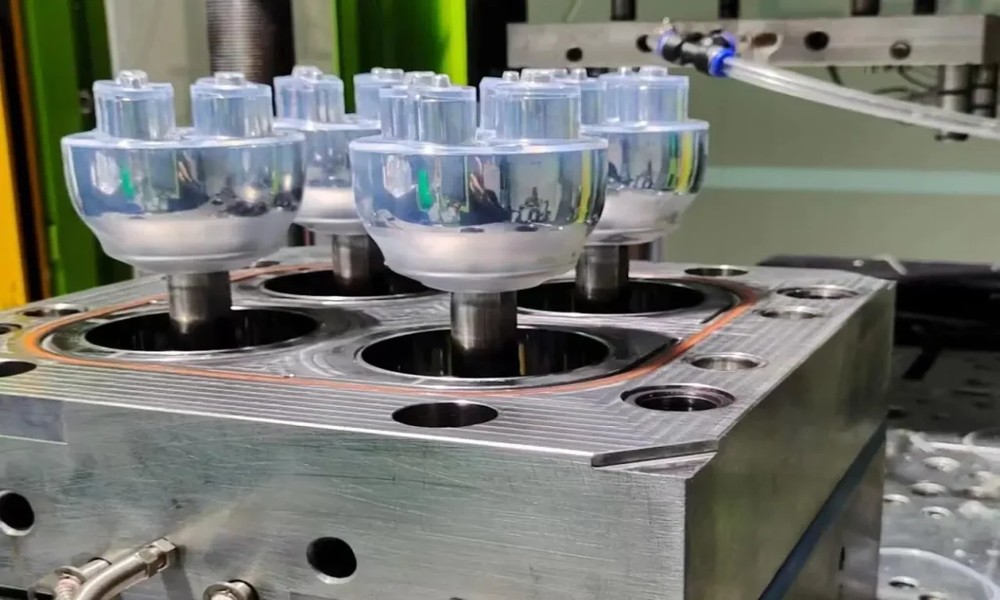
Tiny manufacturing errors create costly performance issues. Precision parts therefore require materials offering repeatable results. Liquid silicone rubber molding answers this need across medical, automotive, and electronic sectors. Through controlled injection processes, intricate shapes emerge with remarkable accuracy. Products remain reliable through heat, pressure, and constant operation. Components such as Liquid Silicone O-Ring seals highlight why manufacturers value dimensional consistency and dependable material behavior.
How Does LSR Molding Achieve Exceptional Accuracy?
Precision begins before material enters tooling cavities. Carefully controlled flow characteristics reduce dimensional variation. Even narrow channels fill without creating incomplete sections. When production volumes increase, repeatability remains strong across entire batches.
Engineers favor this process for several reasons:
- Tight tolerance capability across complex geometries
- Stable dimensions during curing cycles
- Reduced material waste during manufacturing
- Reliable replication of detailed features
Such qualities help maintain part integrity throughout extended service periods.
Why Material Performance Matters Beyond Dimensions
Accuracy alone cannot guarantee component success. Environmental exposure tests material resilience every day. Heat, chemicals, vibration, and moisture create conditions where weaker compounds struggle.
LSR performs well because molecular stability remains intact. Medical valves illustrate this advantage clearly. Repeated movement causes little deterioration, preserving operational reliability over lengthy product lifecycles. Performance remains predictable even when surrounding conditions change substantially.
Where Precision Components Deliver Real Value
Modern products contain increasingly compact assemblies. Smaller spaces leave little room for tolerance drift. A sensor housing, for instance, depends upon exact sealing surfaces and precise alignment.
In fluid-control systems, a Liquid Silicone O-Ring maintains pressure boundaries during continuous operation. Minor dimensional deviations may compromise efficiency. Engineers therefore select molding methods capable of producing identical profiles across substantial production runs.
Key Production Benefits
Manufacturing teams gain practical advantages through:
- Faster cycle completion
- Lower rejection rates
- Consistent cavity filling
Additional operational strengths include:
These factors strengthen production economics while preserving quality expectations.
Can Automation Improve Component Consistency?
Automation removes variability introduced through manual handling. Metering systems control material delivery with impressive precision. Mold conditions remain closely regulated throughout production cycles.
As a result, each finished piece matches design requirements more closely. Electronics manufacturers benefit greatly because connector seals and protective barriers require exact dimensions. Product performance depends upon those small yet critical details.
Precision That Extends Beyond Manufacturing
A medical pump seal and sensor gasket share one requirement: dependable fit. Liquid silicone rubber molding fulfills this need through accurate cavity replication and stable material behavior. The larger implication reaches beyond factory efficiency. When miniature components maintain exact dimensions across thousands of cycles, equipment reliability improves, maintenance intervals extend, and product designers gain greater freedom when creating increasingly compact technologies.
